
What is data governance and why is it important?
Businesses have never had more data at their fingertips. Customer interactions, product telemetry, finance systems, survey responses, support tickets, spreadsheets someone swears are the source of truth – it all adds up fast.
The catch is that data volume doesn't automatically translate into value. When data is inconsistent, hard to find, poorly defined, or spread across silos, teams spend more time arguing about numbers than acting on them.
Poor data governance leads to poor decisions, duplicated work, compliance headaches, and a low-grade sense of anxiety every time someone asks for a report or survey data analysis – not to mention the risk of breaches and fines if your data isn't stored and handled properly.
Data governance is how you change that. It's the framework that brings order, accountability, and trust to your organization's data assets, so people can use the right data with confidence, without creating new risk.
In this guide, you'll learn what data governance is, why it's important, what a practical roadmap looks like, which tools can help, and how to measure success. By the end, you'll have a clear starting point for building an effective data governance program that actually fits how your business works.
What is data governance?
Data governance is the set of policies, processes, roles, principles, and standards that determine how data is managed, accessed, and used across an organization. It clarifies who can do what with data, when they can do it, how it should be done, and how the organization proves it's being done responsibly.
A useful way to think about it is that data governance focuses on decision rights and accountability. It defines:
- How data is defined and documented, so people mean the same thing when they say "active customer"
- How data quality is measured and improved, so reports don't drift over time
- How sensitive data is protected, so access matches risk and regulatory requirements
- How data is shared and reused, so teams don't rebuild the same dataset five different ways
- How data issues are surfaced, triaged, and resolved, so problems don't live forever in Slack threads
Data governance includes both the human side and the technical side. You'll need data owners, data stewards, and a data governance team, but you'll also need tooling and controls that make governance real in day-to-day work.
One important point to remember is that data governance isn't just an IT initiative. IT and data teams often lead the early work, but governance only sticks when it supports business processes, reduces friction for data users, and earns the trust of the people who rely on data to make decisions.
Why is data governance important?
Data governance matters because it turns all your data into something you can actually analyze and use. When governance is weak, teams spend their time compensating – cleaning exports, reconciling definitions, double-checking numbers, and limiting access because no one is confident it's safe.
When governance is strong, data becomes an asset you can build on. You get more trustworthy data, clearer ownership, fewer surprises during audits, and a better platform for analytics, automation, and data-driven innovation.
Lack of governance tends to show up in familiar ways:
- Data silos form because teams don't trust shared datasets, or can't get data access quickly
- Poor data quality creeps in as systems change and nobody owns data quality rules end-to-end
- Compliance risk increases when sensitive data is copied into tools that weren't designed for it
- Decision-making slows down because people debate the numbers instead of the plan.
A robust data governance strategy doesn't eliminate every issue overnight, but it creates the structure to manage risk and keep improving data accuracy over time.
It’s little surprise, then, that between 2007 and 2024 there was a 43.4% growth in published research papers on data governance.
The key benefits of data governance
The benefits of data governance are easiest to see when you translate them into day-to-day outcomes:
- More reliable reporting – A shared definition of metrics and stronger data integrity means fewer debates about which dashboard is right
- Higher data quality – Teams can spot issues earlier, enforce data quality standards, and improve data quality without heroics.
- Clearer accountability – Data ownership stops being fuzzy. Data owners and data stewards know what they're responsible for, and data consumers know where to go with questions.
- Safer data access – Access controls, classification, and data privacy practices reduce the risk of exposing financial data, personal data, or other critical data assets.
- Faster analytics and AI – Machine learning and automation rely on high-quality data. Effective data governance programs reduce the prep work and increase confidence in outputs.
- Lower compliance burden – Regulatory compliance gets easier when policies, retention rules, and approvals are documented and consistently followed.
- Better reuse – A centralized data catalog and metadata management make it easier to discover data assets and avoid rebuilding pipelines.
Those benefits sound straightforward, but implementing data governance comes with real friction. Naming the challenges upfront makes it easier to design a governance strategy that people will actually follow.
Common data governance challenges
Most data governance initiatives don't fail because teams don't understand the concept. They stall because governance changes how people work, and change always has a cost.
Common challenges include:
- Getting buy-in across the business – Governance can feel like an extra process, especially for teams that move fast and ship often
- Being seen as a cost center – The payoff is real, but it can be indirect unless you tie governance activities to business outcomes.
- Unclear data ownership – In many organizations, "who owns this data?" has multiple answers depending on whether you mean the system, the pipeline, the metric, or the policy.
- Legacy systems and messy integrations – Data integration across older systems can make lineage and data flow hard to map, even before you try to enforce standards.
- Scaling governance as data grows – Early governance processes that work for one data domain often break when you add more teams, more sources, and more external data.
- Over-indexing on tooling – Data governance tools help, but tools can't replace decision-making, incentives, and accountability.
Here's a quick side-by-side view of the tradeoffs most teams navigate:
Once you understand both the upside and the obstacles, the next step is building a data governance framework.
Core components of a data governance framework
A data governance framework is the structure that turns good intentions into repeatable practice. It doesn't need to be heavy, but it does need to be specific enough that people can follow it without guessing.
Most effective data governance programs include the components below. You can adopt them gradually, but they work best as a connected system.
Data policies and standards
Policies explain the rules of the road. Standards make those rules usable.
A solid baseline usually covers:
- Data classification to codify data based on sensitivity and risk
- Data access expectations, including approval paths and least-privilege access
- Data retention rules tied to regulatory requirements and business needs
- Data sharing guidelines, including what's allowed with vendors and partners
- Naming conventions and definitions for critical fields and metrics
Policies should be written in plain language and mapped to real workflows. If people can't follow a policy without scheduling a meeting, the policy won't survive.
People and roles
Governance needs owners, not just opinions. The specific org chart varies, but most governance teams include:
- Data owners who are accountable for the meaning, usage, and risk of a data domain, like customer, product, finance, or research
- Data stewards who manage day-to-day data governance activities, definitions, and issue resolution
- Data teams that implement controls, pipelines, and monitoring
- Security and compliance partners who guide risk management and data privacy
In larger organizations, a chief data officer (CDO) or similar leader often sponsors the program and aligns it with business strategy.
Metadata management and a centralized data catalog
Governance gets much easier when people can find and understand data without tribal knowledge. A data catalog supports data discovery by documenting datasets, owners, definitions, lineage, and usage context.
Good metadata management helps you answer questions like:
- Where did this metric come from?
- Which reports depend on this table?
- Who uses this dataset, and for what purpose?
- What quality checks are applied?
A centralized data catalog also reduces duplication, because data users can see what already exists before creating new copies.
Data quality standards and data quality rules
Data quality isn't a vibe. It's a set of agreed standards and measurable checks.
Data quality rules might include:
- Valid ranges, e.g., no negative ages
- Completeness, e.g., required fields populated
- Uniqueness, e.g., no duplicated IDs
- Timeliness, e.g., freshness thresholds
- Consistency across systems, e.g., matching keys and definitions
Effective data governance programs assign ownership for these rules, set targets, and track drift over time.
Access controls and security practices
Data governance and data security overlap heavily, especially when the organization handles sensitive data. Governance defines who should access data. Security enforces it.
A practical approach includes:
- Role-based access controls
- Audit logs for sensitive actions
- Data masking or tokenization where appropriate
- Approval workflows for high-risk datasets
- Periodic access reviews to remove stale permissions
These controls matter even more when data is distributed across cloud platforms, a cloud data lake, SaaS tools, and on-prem systems.
Data governance process and issue management
Governance only becomes real when there's a clear process for handling change and resolving problems.
That typically includes:
- A workflow to propose and approve new definitions
- A way to log and triage data issues
- Service-level expectations for resolving issues
- A process to manage schema changes and downstream impact
Once these components are in place, you can turn them into a plan. That's where a roadmap helps – especially for growing, data-driven companies that need to move quickly without creating avoidable risk.
Building a data governance roadmap
A data governance roadmap is your practical plan for moving from today's reality to a more controlled, trusted, and scalable approach. The most successful roadmaps are iterative. They start with the critical data assets that matter most, then expand as the organization builds capability.
A helpful roadmap also keeps one foot in the real world. If governance isn't improving how teams manage data, it's just documentation.
Below is a phased approach you can adapt to your organization, but it makes sense to run a data governance readiness assessment as the first phase.
Phase 1: Assess and prioritize
Start by getting clear on your current state, without turning it into a months-long audit.
Focus on:
- Inventorying key data assets – Identify the systems, datasets, and reports that drive important decisions.
- Mapping data flow – Document where data originates, how it moves, where it's transformed, and where it's consumed.
- Identifying pain points – Look for recurring issues: mismatched metrics, broken pipelines, manual data cleaning, duplicated definitions.
- Choosing priority domains – Pick a small number of data domains to tackle first, based on business impact and risk. Customer, finance, and regulated research data are common starting points.
This phase is also a good time to define what "good" looks like. Decide which outcomes matter most, such as improving data accuracy, reducing compliance incidents, or shortening reporting cycles.
Phase 2: Define roles and policies
Once you've prioritized, make accountability explicit before you roll out tools.
Key actions include:
- Assigning data owners and data stewards for each priority domain
- Defining decision rights so teams know who approves definitions and access
- Writing lightweight policies for access, retention, quality, and classification
- Setting initial data quality standards and selecting the first set of data quality rules to monitor
If teams can't answer who owns a dataset, governance will stay theoretical. Clear ownership turns governance into something people can actually use.
Phase 3: Implement and iterate
Implementation works best in small loops. Roll out one or two governance processes, measure adoption, refine, then expand.
Common steps:
- Introduce a centralized data catalog and document critical datasets first
- Add access controls and approvals for the highest-risk data
- Implement monitoring for the most important quality checks
- Create a simple intake and triage process for data issues
- Run short training sessions to build data literacy for the teams using governed data
As the organization matures, you can broaden the scope to include more enterprise data, more external data sources, deeper lineage, and more automated enforcement.
A roadmap gets you moving, but most teams also want quick wins. The right data governance tools can help you improve data quality and compliance quickly, as long as you evaluate them through the lens of your governance process.
Data governance tools to improve quality and compliance
Tooling is where governance becomes easier to scale. The goal isn't to buy a single data governance solution and call it a day. The goal is to reduce manual work, improve visibility, and make the governed path the easy path.
There are plenty of tools out there – in fact, the data governance market is forecast to grow to $12.66 billion by 2030 – so how do you select the right ones?
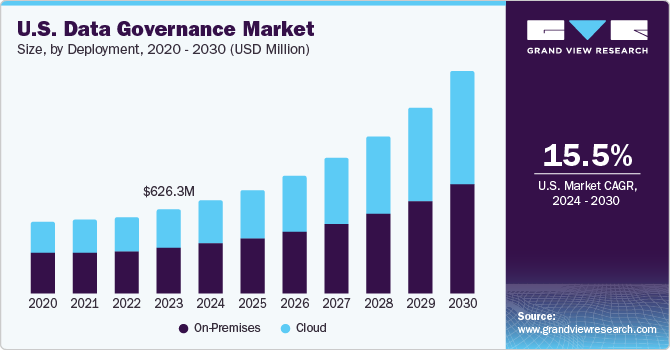
Here are the main categories to consider, along with what to look for.
Data catalogs and metadata management platforms
A data catalog is often the backbone of a governance program because it supports data discovery, definitions, ownership, and lineage. Some platforms also support stewardship workflows and policy documentation.
When you evaluate data catalog tools, look for:
- Automated metadata ingestion across your data stack
- Search that works the way data consumers actually search
- Clear ownership fields and stewardship workflows
- Lineage views that help teams understand impact
- Integration with access governance and ticketing
Data quality tools and data observability
Data quality tools help you define, run, and monitor data quality rules across pipelines and datasets. They're especially useful when your organization needs to ensure data accuracy at scale.
Look for:
- Support for both batch and streaming checks, if relevant
- Alerting that routes issues to the right owner
- The ability to track trends in quality over time
- Practical integration with your data warehouse, lake, or ETL tools
Master data management platforms
Master data management (MDM) helps when the business needs consistent entities across systems, like customer records, products, or locations. MDM becomes important as organizations integrate data across CRMs, ERPs, finance platforms, and operational tools.
Look for:
- Match and merge capabilities to resolve duplicates
- Rules that can be explained and audited
- Governance support for entity definitions and stewardship
- Integration with downstream analytics and operational systems
Access governance and security solutions
Access governance tools help enforce who can access what, especially across multiple systems. They can support approvals, access reviews, and policy enforcement, which is critical for sensitive data and regulatory compliance.
Look for:
- Role-based access patterns that match real job functions
- Automated access reviews and audit trails
- Integration with identity providers and SSO
- Support for fine-grained permissions where needed
Practical vendor considerations
Many organizations mix and match tools from major cloud providers and specialist platforms. You'll see options from vendors like Google, Microsoft Azure, IBM, Informatica, and Qlik, alongside focused tools for quality, lineage, and access governance.
Instead of choosing based on brand, choose based on fit:
- Can the tool integrate with your current data stack?
- Can it scale as your data volume and number of data users grow?
- Will stewards actually use it day to day?
- Does it reduce risk, or just document it?
Once tools are in place, measurement keeps the program honest. The next section covers how to measure data governance success in ways that matter to both data teams and business leaders.
How to measure data governance success
Metrics are how you prove governance is working and where it needs attention. The best approach combines operational metrics (how governance is functioning) with business-level indicators (whether governance is improving outcomes).
Start by tying measurement to the goals you set in your roadmap. Then track a balanced set of signals.
Operational metrics to track
These metrics show whether the data governance process is functioning:
- Data quality scores for critical datasets, such as completeness, validity, and freshness
- Number of data issues logged vs. resolved over time
- Mean time to resolve data incidents for priority domains
- Policy compliance rates, such as completion of access reviews or retention enforcement
- Catalog coverage, like the percentage of critical datasets documented with owners, definitions, and lineage
- Access request turnaround time to ensure governance isn't creating bottlenecks
Business-level indicators that show value
These indicators connect governance to outcomes:
- Time saved on data preparation for analytics, reporting, and research
- Reduction in reporting rework caused by inconsistent definitions or data errors
- Fewer compliance incidents related to data privacy, access, or retention
- Higher confidence in reporting, measured through stakeholder feedback or survey data
- Faster delivery of analytics and BI initiatives because data is easier to trust and reuse
Governance success also shows up culturally. When teams stop hoarding data and start reusing governed datasets, that's a strong sign your program is becoming part of how the business operates.
Measurement tells you what's happening. Best practices help you keep momentum and avoid the pitfalls that slow governance down after the initial push.
Data governance best practices
Most teams don't need more theory. They need patterns that work under real constraints, with real systems, and real people who have deadlines.
These best practices show up consistently in effective data governance initiatives:
- Start small and scale – Pick one or two domains where governance will reduce risk or save time quickly, then expand
- Secure executive sponsorship – Governance needs support when tradeoffs arise, especially around ownership and prioritization
- Design for data users – If governance makes it harder to use data effectively, people will route around it, so build processes that remove friction
- Treat governance as ongoing – An effective data governance strategy evolves with systems, business strategy, and regulatory requirements
- Embed governance into business processes – Make governance part of how data is collected, shared, and used, not a separate compliance exercise
- Make ownership visible – Put owners and stewards in the catalog, in access workflows, and in issue resolution paths
- Automate where possible – Automated checks, lineage, and access reviews reduce manual workload and improve consistency
- Invest in data literacy – A values data culture is one where people understand definitions, limitations, and how to handle sensitive data responsibly
- Prioritize risk management – Classify data based on sensitivity and focus controls on the highest-risk datasets first, including financial data and regulated research data
With these practices in place, governance becomes less about control and more about confidence. That's the right note to end on – and a good moment to connect governance back to the way organizations collect data in the first place.
Final thoughts
Data governance is how growing businesses move from messy data to trustworthy data. It gives you the structure to manage risk, protect sensitive data, improve data quality, and make better decisions without second-guessing the numbers.
If your organization collects data through surveys, forms, questionnaires, or research workflows, governance starts earlier than most teams think. It starts at data collection, with consistent structures, clear permissions, and an approach that supports data sovereignty and regulatory compliance from day one.
Checkbox helps teams collect, manage, and act on data through structured, governed survey processes. With flexible hosting options, including on-premises deployment for full control of data security and infrastructure, it's built for research and feedback programs where governance isn't optional.
If you need tighter regional controls, Checkbox also supports hosting in the European Union for teams that want stronger alignment with data residency expectations. For day-to-day control, Checkbox includes survey security features like role controls, access controls, and single sign-on options that help teams manage access responsibly.
If you're building a data governance program and want your data collection layer to support it, sign up for a Checkbox demo and see how governed surveys can fit into a broader governance strategy.
Data governance FAQs




Contact us
Fill out this form and our team will respond to connect.
If you are a current Checkbox customer in need of support, please email us at support@checkbox.com for assistance.
