
How to write education survey questions that improve your student engagement
An effective educational process is always built on honest feedback. Without feedback from teachers, students, and parents, mistakes go unnoticed, progress becomes random, and the learning experience turns into a process of trial and error. Each lesson, carefully designed curriculum, course content, and overall educational experience should be based on an understanding of what students actually need across different education levels.
Instead of relying on assumptions, educational institutions can use well-crafted education surveys and student surveys to understand student engagement and the learning environment, evaluate teaching quality, and uncover valuable insights into academic achievement and academic success. A well-designed education survey supports informed decisions that improve educational outcomes and the school’s overall quality.
This article will help you create engaging surveys that generate actionable feedback, support student voice, and improve student outcomes across school life, campus life (depending on whether you work in a school or higher education institution), and in-person learning.
You'll learn how to design a well-designed survey, apply an effective survey template, and protect sensitive data from survey respondents. You’ll also find examples of education survey questions, education questionnaires, and practical guidance for using interactive surveys to collect feedback.
How to create education surveys: Start with these steps
By following these steps, you can create education survey questions that uncover critical insights, encourage meaningful engagement, and support better decision-making across various aspects of your educational program.
Outline your primary aim
Whether you're aiming to encourage student participation, understand student learning styles, help educators develop, or evaluate teaching methods and course objectives, the success of your school survey depends on clarity of purpose. A single education questionnaire should focus on one primary goal.
For example, your survey might aim to understand motivation and engagement first, while also identifying barriers related to study habits, preferred learning style, or course materials.
Where to start:
- Decide who the survey is for (students, parents, teachers, administrators)
- Choose the right timing (mid-term, end-of-course, post-event)
- Avoid unnecessary questions that reduce response quality
Remember who you're asking
Different survey respondents provide insights into different parts of the learning experience.
- Students share perspectives on student participation, student well-being, campus safety, workload, and everyday interactions with other students
- Parents focus on their child’s education, communication, and parent engagement
- Teachers provide feedback on educational materials, professional development, and teaching quality
- Administrators assess school policies, support services, and the school’s performance.
Segmenting your audience ensures comprehensive data without confusion.
Add relevant, clear, and meaningful questions
High-quality education survey questions are clear, focused, and aligned with survey design best practices.
- Use simple, accessible language
- Avoid educational jargon; only use it when the audience clearly understands it
- Focus on one idea at a time to support critical thinking
Here’s an example of a question unlikely to get results: "Do you enjoy learning online, and do you think it improves your grades?"
Instead, break it into two separate questions: "Do you enjoy learning online?" and "Do you think online learning improves your grades?")
Combine quantitative and qualitative questions
The most effective student surveys combine quantitative questions (rating scales, multiple-choice questions, and Likert scales) with qualitative questions (open-ended questions) to collect both structured data and candid feedback.
Open-ended questions can add significant depth to your research, but they should be used strategically. A small number of open questions helps collect honest feedback without exhausting respondents.
Questions that invite student input often reveal insights about learning objectives, problem-solving skills, and effective learning.
Test, improve, and iterate
A pilot school survey with a small group can help you identify gaps in survey design and unclear questions that may confuse your respondents, technical issues, or unintended interpretations. It's crucial to continually improve your surveys based on respondents' feedback and results.
What education surveys are used for
Surveys are powerful tools that help educational institutions understand learning experiences, improve student engagement, understand school climate, identify areas for improvement, and drive meaningful change.
Below is what these surveys specifically help you achieve and what they are aimed at.
Engage students and measure engagement trends
Understanding engagement is essential to improving student participation and long-term academic success. Surveys reveal how interactive surveys, teaching approaches, and the learning environment influence motivation and student voice.
A 2024–25 national survey in England found that one in four pupils disengage when transitioning from primary to secondary school. Students are reporting steep declines in enjoyment, feelings of safety, and belonging.
Other statistics from educational data resource ZipDo show that students who actively participate in class discussions are 25% more likely to retain information. It was also found that gamified or interactive learning increases engagement by up to 60%.
These reports highlight the importance of surveys for monitoring student engagement and learning environment satisfaction.
By staying on top of things and collecting feedback regularly, educational institutions can track how engagement evolves and what changes/improvements might positively influence it.
Understand areas for improvement
Surveys expose gaps in educational processes and highlight opportunities for targeted intervention, such as gaps in course content and ways to refine teaching methods and educational materials.
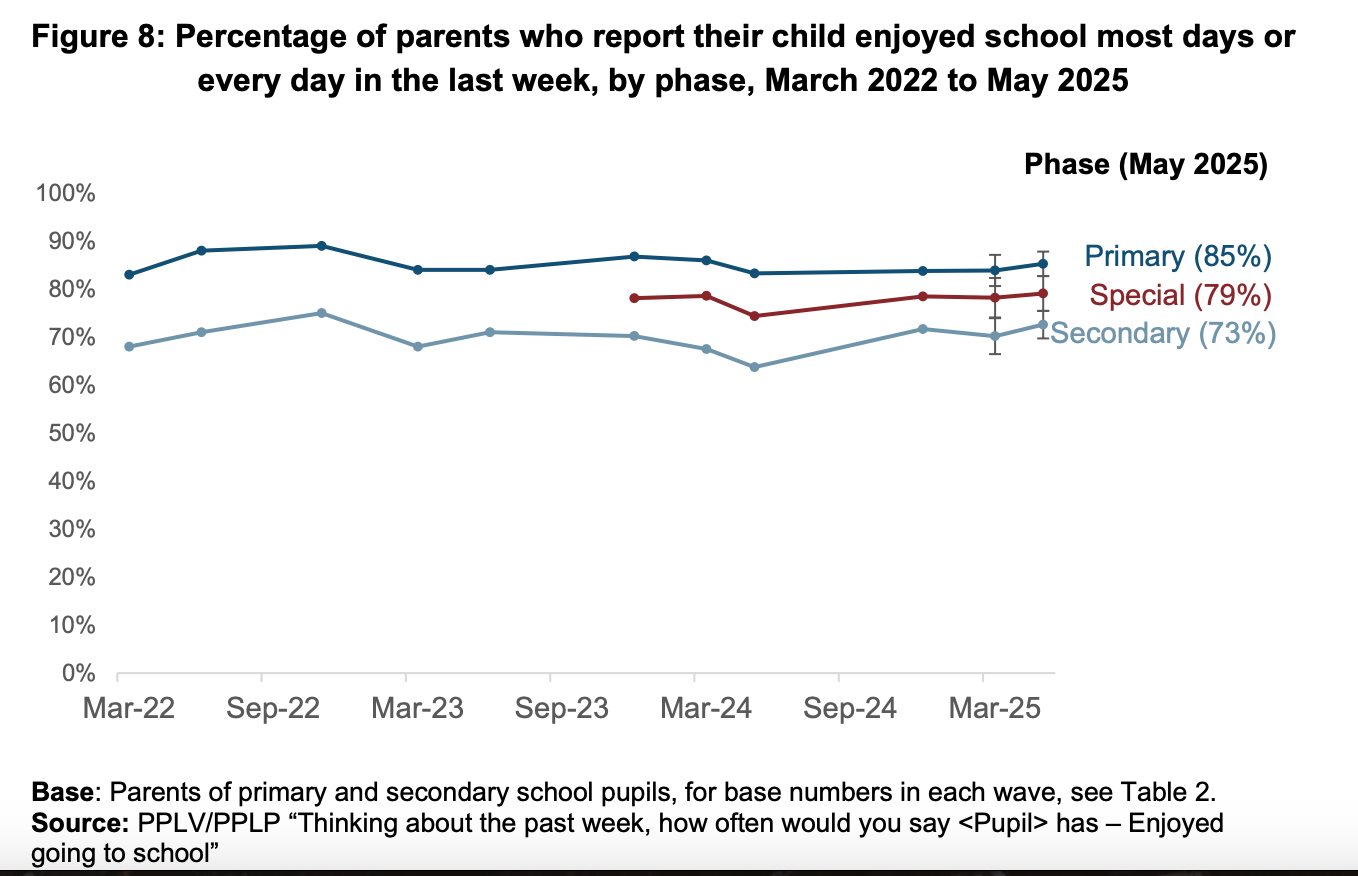
For example, national UK pupil experience surveys published in late 2025 include comprehensive data on students' feelings of belonging and motivation to learn.
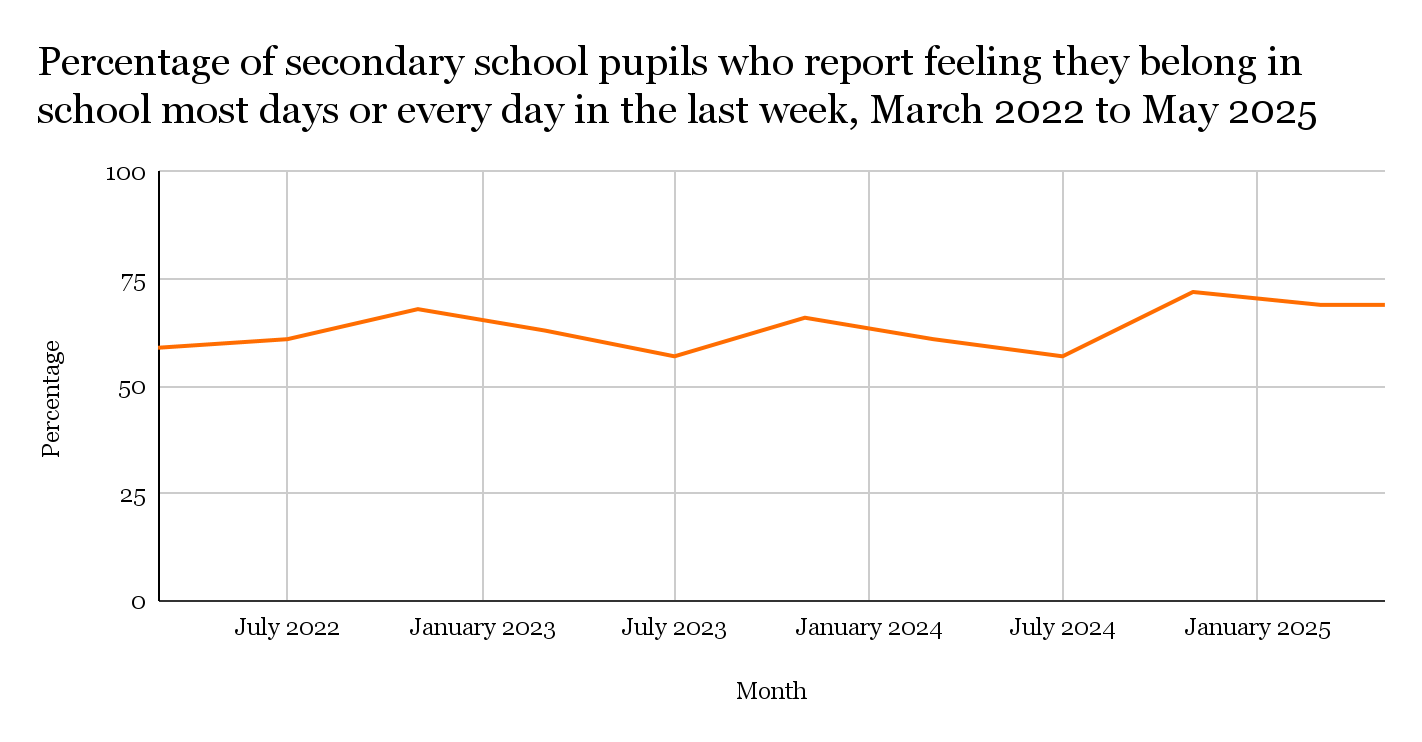
This data enables institutions to benchmark their progress in student satisfaction and make improvements where necessary. For example, educators can refine curriculum design or improve pedagogical approaches.
Ask students' parents for their opinions
Parental surveys capture meaningful insights on perceptions of school life and their child’s education that might not emerge through student data alone. Strong parent engagement with surveys helps educational institutions to measure satisfaction with communication, clarity of expectations, home support, and overall experience.
When parents and family members feel heard, it leads to improved student outcomes, such as higher achievement and improved well-being.
Assess teacher satisfaction and professional needs
Teacher feedback is essential for designing supportive workplaces and maintaining a high standard of education. It supports better leadership, targeted professional development, and improved teaching quality.
With the right questions, survey data can reveal how educators perceive leadership support, professional development opportunities, workload balance, and resource availability. Insights you gain from teachers highlight areas for leadership improvement and more targeted staff support systems – ultimately leading to better educational outcomes for students.
Understand broader trends across institutions
Aggregated survey results provide critical insights into national and regional trends related to engagement and well-being – data that supports evidence-based policy and planning.
Large‑scale academic research surveys collect data from tens of thousands of learners across multiple countries. For example, a global computer science education survey included responses from over 18,000 learners in 173 countries. This broad sample enables researchers and educational institutions to examine trends in motivation, challenges, and learning preferences at scale.
Aggregated survey results are also essential when comparing performance over academic years. Educators can identify emerging challenges that influence engagement, such as well-being issues or equity gaps.
As well as creating and conducting your own surveys, you can also use resources like the research above as secondary research to build your own insight-gathering strategies on.
Obtain a complete picture
The most effective education surveys combine feedback from students, parents, teachers, and administrators. Together, these perspectives can help create an inclusive environment and a clearer understanding of the full educational experience.
When analyzed together, all these data points provide a comprehensive view of the educational experience. This, in turn, makes it possible for institutions to tailor educational strategies to reflect the needs of the whole school community.
Why you should use education surveys
Education surveys help institutions collect feedback and useful data to make immediate improvements, track progress over time, identify trends, and plan strategically for the future.
Capture actionable and meaningful data
Every well-designed survey generates quantifiable and qualitative data that can inform decisions across multiple stakeholders:
- Students: Engagement levels, learning preferences, barriers to participation, and satisfaction with teaching methods.
- Teachers: Perceptions of workload, resource adequacy, leadership support, and professional development needs.
- Parents: Satisfaction with school communication, support for student learning, and overall impressions of the institution.
- Administrators: Operational effectiveness, impact of school policies, and trend analysis across departments or schools.
For example, the 2025 study of UK pupils mentioned above found that schools using targeted student engagement surveys could identify specific areas where classroom participation was low, enabling instructors to adjust their teaching methods promptly.
Drive outcomes from individual surveys
A single, well-structured education questionnaire provides immediate insights that enable you to:
- Adjust lesson plans, course marterials or teaching strategies based on student feedback
- Improve or expand classroom resources or technology after teacher surveys
- Refine parent communication methods to strengthen home-school collaboration
- Focus in on key learning objectives and the teaching methods that achieve them
Achieve long-term benefits
The most powerful advantage of education surveys comes from tracking feedback over time. Running surveys systematically will allow you to:
- Monitor trends – Track engagement, satisfaction, and performance across terms or years.
- Measure impact – Evaluate whether interventions, such as curriculum adjustments, new technologies, or professional development programs, are effective.
- Plan strategically – Use longitudinal data to inform policy decisions, resource allocation, and future programs.
You can then combine with data on academic achievement to identify trends that improve learning and the college or school over time.
Build a culture of continuous improvement
Education surveys are most effective when embedded in an institution’s culture. When actionable feedback from both individual surveys and longitudinal survey tracking is consistently used, educational institutions can identify emerging challenges before they escalate, recognize successful programs, and replicate effective practices.
Use surveys that provide real insights to encourage meaningful engagement with students, parents, and teachers alike, leading to positive learning outcomes. Request a Checkbox demo!
The best practices of using education surveys
Education surveys only work well if they're designed and implemented responsibly. Focus on collecting meaningful insights while safeguarding the sensitive data of the respondents with the right survey design tools.
Protect data and respondents' privacy
Surveys often collect confidential information. To maintain trust and comply with regulations:
- Use secure survey platforms that comply with privacy laws (e.g., GDPR, FERPA).
- Limit access to raw data to authorized personnel only.
- Store data securely, whether on-premise or in compliant cloud services.
- Anonymize or aggregate data when possible to protect respondents' identities.
Established and reputable organizations, such as the European Education and Culture Executive Agency (EACEA), implement these principles to ensure data privacy and secure survey handling.
Do you need the highest level of security and control over your data? On-premise survey tools, like Checkbox, allow educational institutions to host surveys on their own servers, providing them with data sovereignty and full control over data security, infrastructure, and integrations.
Establish a culture of feedback
Building a robust culture of feedback is about creating an environment in which contributions, suggestions, and comments are valued, solicited, and acted upon.
Students, educators, and parents want their opinions to matter, so share your findings with them transparently. Act upon insights to drive meaningful enhancements and to reinforce the fact that feedback is not just collected, it creates real change.
Maintain survey integrity and protect data
To ensure the integrity of the survey and protect the data collected, it’s crucial to avoid duplicate or fraudulent survey responses. These problems can be avoided by implementing robust audit mechanisms to confirm the validity of processes.
It's important to closely monitor the patterns of survey completion for irregularities that could impact the quality of the data collected. Also, the survey processes should be compliant with the institutional survey ethics.
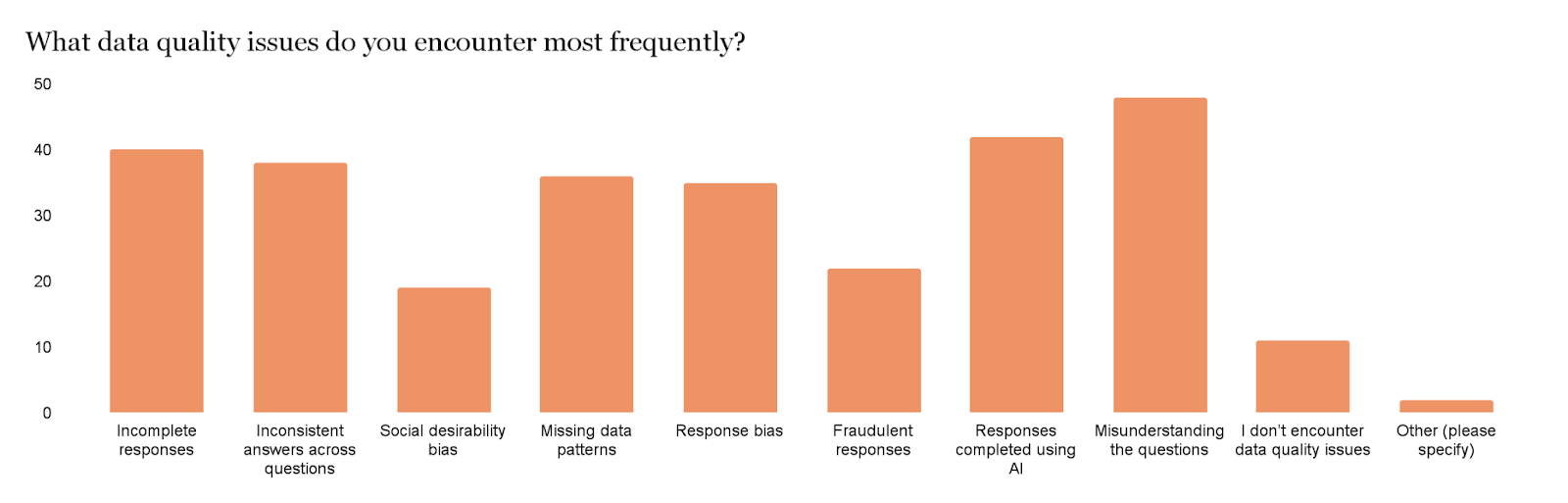
In a recent Checkbox survey, we found that, although fraudulent responses were one of the less impactful data issues researchers faced, AI responses, which is very relevant, were one of the major issues.
Plan for data use and action
Before collecting responses, it's necessary to define what analysis will take place and how it will contribute to informed decision-making. After changes are implemented based on your respondents' feedback, the impact of these improvements should be tracked to measure effectiveness.
Survey findings should also be integrated into broader institutional improvement plans to support continuous and consistent progress.
Use technology for efficiency
If you want to automate the process of gathering feedback, data collection, reporting, and access control, you can use education industry survey tools such as Checkbox.
Consider integrations with other systems (LMS, HR platforms) for streamlined insights.
Take advantage of advanced features like role-based access, secure on-premise hosting, and audit trails. These features will help you to maintain control while maximizing utility.
Examples of top education survey questions
Wondering how the right survey questions can help? These examples for students, educators, and parents highlight the purpose and value of each question and what the answers can reveal.
Student-focused questions
Engagement and participation
- Question: "On a scale of 1–5, how motivated do you feel to participate in class activities?"
- Benefit: Quantifies engagement levels, so you can identify students at risk of disengagement and adjust learning methods accordingly.
Learning experience
- Question: "Which classroom activities help you learn best? (Multiple choice question for group work, lectures, projects, online activities, other)."
- Benefit: Highlights preferred learning styles and helps teachers to tailor lesson plans for maximum effectiveness.
Wellbeing/support
- Question: "How comfortable are you approaching your teacher with questions or concerns?"
- Benefit: This question identifies potential barriers to learning and helps to create strategies to enhance teacher-student communication.
Open feedback
- Question: "What one change would most improve your learning experience?"
- Benefit: You get qualitative insights that can uncover issues not captured by structured questions.
Teacher-focused questions
Professional development
- Question: "Which professional development areas would help you improve your teaching effectiveness? (Multiple choice question)."
- Benefit: Directs investment in training that meets teachers' real needs.
Job satisfaction
- Question: "On a scale of 1–5, how supported do you feel by our school leadership?"
- Benefit: The question measures morale and leadership effectiveness. This can influence teacher retention.
Resource quality
- Question: "Do you have access to the resources and tools necessary to teach effectively? (Yes/No, optional answers)."
- Benefit: Identifies gaps in equipment, technology, or materials.
Parent-focused questions
Communication
- Question: "How satisfied are you with the frequency and clarity of communication from your child’s school?"
- Benefit: This question evaluates communication strategies and identifies weak areas for improvement.
Support for learning at home
- Question: "How confident do you feel in supporting your child’s learning at home?"
- Benefit: Highlights opportunities for parent engagement programs or guidance resources.
Overall satisfaction
- Question: "How would you rate your overall satisfaction with the school?"
- Benefit: Provides an aggregate measure of parental satisfaction and can track trends over time.
A well-structured question flow
Start with general questions to ease respondents into the survey. For example, student surveys might begin with overall satisfaction or engagement questions.
Progress to more specific topics that align with your objectives. For example, surveys for teachers might include questions on job satisfaction, teaching resources, or training needs.
Include open-ended questions last to gain qualitative insights once your respondents are familiar with the survey and feel confident. You can ask questions like "What is the one thing that could make your school experience better?"
End with a thank-you and a follow-up to maintain high engagement and encourage future participation.
Remember, a well-planned question flow equals enhanced response quality.
Final thoughts
Education surveys are a powerful tool for educational institutions, including schools, academic institutions, and universities, to enhance student engagement, strengthen academic success, and enhance the overall learning environment.
By using relevant and well-crafted education survey questions, researchers can gain insights into the learning preferences of students, identify opportunities to support teachers to improve teaching effectiveness, track trends over time, and more.
If your institution or company is ready to transform feedback from educators and students into action, Checkbox makes it easy. With this modern, secure, and customizable survey tool – which has a number of deployment options – you can collect valuable data, analyze it, and act on insights.
Request a demo of the Checkbox tool to see how your school, college, or university can harness the full potential of education surveys to improve student engagement and boost overall learning satisfaction.
Education survey questions FAQs



Contact us
Fill out this form and our team will respond to connect.
If you are a current Checkbox customer in need of support, please email us at support@checkbox.com for assistance.
