
What is marketing intelligence, and how to harness it for your brand?
Imagine you have a clear view of your customers' needs, your competitors' moves, and the trends shaping your industry. Just think about how significantly you could optimize your brand growth strategy! That's what marketing intelligence offers.
It's the process of market analysis, gathering information, turning it into insights, and using them to make smarter decisions, improve marketing strategies, and discover new opportunities earlier than competitors.
In this article, you'll learn what marketing intelligence is and how businesses use it. You'll discover practical ways your brand can harness this process to develop, connect with customers, and stay ahead in a market. Along the way, we also explore the question: What is a marketing intelligence platform? Armed with all this knowledge, you'll be able to turn data into actionable insights.
What is marketing intelligence?
Marketing intelligence is the process of gathering, analyzing, and interpreting information about your market, industry, competitors, and customers. It helps brands understand what is happening in their field and use these insights to improve strategies, offer innovative products, and adjust marketing campaigns.
Marketing intelligence vs. market research
These two terms are sometimes used interchangeably, but they're essentially different. Market research is focused, short-term, and goal-oriented. It answers specific questions through market research surveys, focus groups, or market studies.
For example, a brand wants to test a new product concept, so it conducts a one-time survey with 300 target customers to gauge their interest in it.
Marketing intelligence is an ongoing process. Businesses collect data from multiple sources (surveys, social media, web analytics, customer feedback) to get a broad view of the market and obtain insights for long-term strategy.
For example, a company continuously monitors social media mentions, website traffic, competitor activity, and customer feedback to detect trends, spot emerging opportunities, and guide future marketing campaigns.
How do businesses use marketing intelligence?
Businesses use market analysis to make smarter decisions, improve sales and marketing performance, and outperform competitors. Below are some examples of how marketing analytics is used.
- Customer behavior insights: Marketers learn what customers want, how they make decisions, what turns them off, and what motivates them to buy.
- Competitor tracking: Experts monitor competitors' products, services, successful campaigns, and strategies to spot opportunities and identify market gaps.
- Marketing campaign optimization: Marketing intelligence helps marketers refine messaging, targeting, and when campaigns run, improving return on investment (ROI).
- Market opportunity discovery: Marketers can discover trends and gaps in the market before competitors do.
- Risk reduction: Experts can make decisions based on real data rather than assumptions, avoiding costly mistakes.
How can you develop your marketing intelligence
Let's consider how you can gain valuable insights and use them to enhance your marketing strategies.
1. Define your goals
Do you want to learn about customer behavior, competitor activity, trends related to your business, or measure the effectiveness of your marketing efforts?
2. Get valuable data
Obtain information from a variety of sources, gathering it with the help of survey tools, web analytics, social media, or industry reports. To simplify data collection and survey creation, you can use dedicated platforms such as Checkbox.
3. Analyze the data you collected
Look for patterns, trends, and actionable insights. Your goal here is to understand what insights you can extract from the data you have.
4. Share the results with teams
Share the results with your marketing, sales, product development, and management teams to ensure they can take action.
5. Optimize continuously
To stay ahead of market changes, it is necessary to constantly update the database, improve methods (data analysis, reporting, campaign optimization methods), and adjust strategies.
Discover how your brand can gather customer data to turn into actionable insights for smarter marketing, sales, and product decisions. Request a Checkbox demo!
The marketing intelligence gathering process
Marketing analytics is based on collecting information from multiple sources to gain a complete understanding of your market.
Internal sources
These are data points that come from within your organization:
Surveys
Use case: Understand customer needs, preferences, and satisfaction levels.
Tools: Marketing analytics platforms like Checkbox.
Surveys are one of the most direct ways to gather insights from your audience. They can be simple, one-time surveys with basic market research questions or more advanced formats such as dynamic surveys, which adjust questions based on previous responses.
However, collecting feedback is only the first step. If you want to turn this information into actionable strategies, a marketing intelligence or analytics platform is essential.
What is a marketing intelligence platform?
Marketing intelligence platforms help companies gather, organize, and analyze data from multiple sources, providing clear insights that drive smarter decisions. Tools like Checkbox make it easy to design, distribute, and analyze surveys, so you can convert customer feedback into meaningful, data-driven actions for your teams.
Web analytics
Use case: Optimize website performance and marketing campaigns.
Tools: Google Analytics, Adobe Analytics, Mixpanel.
Web analytics helps to track user behavior, such as which pages are visited most, how long users stay, and where your visitors drop off. For example, if visitors leave a product page quickly, the brand can improve the content or page design to increase conversions.
Customer feedback
Use case: Improve products and customer experience.
Tools: Voice of the Customer (VoC) software, customer support software, feedback widgets & in-app surveys.
Customer feedback from reviews, support tickets, or focus groups shows what works and what doesn't. A brand might use this to refine a product feature or adjust service policies to boost customer satisfaction.
To effectively manage and analyze customer feedback, companies can use a voice of the customer software. These platforms gather input from multiple channels, analyze trends, and surface key insights, so brands can act fast and improve both products and the overall customer experience.
External sources
These are data points collected from outside your organization.
Social media monitoring
Use case: Identify trends, measure brand sentiment.
Tools: Brandwatch, Sprout Social, Hootsuite Insights.
Social media monitoring will help you to understand how customers feel about your brand, service, or products. A company can track mentions of its new campaign, see what goes viral, adjust messaging in real time, or spot emerging trends.
Competitor analysis
Use case: Spot opportunities and identify market gaps.
Tools: Semrush, Ahrefs, SimilarWeb, and other competitive intelligence dashboards.
When brands analyze competitors' pricing, web presence, promotions, and product launches, they can identify gaps in the market. For example, noticing that a competitor is not targeting a specific demographic can inspire a new marketing campaign aimed at that audience.
Industry reports and news
Use case: Make strategic, forward-looking decisions.
Reports and articles provide insight into broader industry trends. For example, a company could use a market report to plan a product launch in a growing niche before competitors enter.
For strategic decisions, it's helpful to use reports from Gartner, Forrester, McKinsey Insights, and other credible websites, which provide proven forecasts. Combine them with less formal sources such as Reddit or Medium that reveal new ideas and user reactions. Together, these secondary research reports and articles provide a comprehensive understanding of the market and needs of your target audience.
How do brands benefit from marketing intelligence
Marketing analytics delivers significant advantages across an organization, from marketing and sales to product development and customer service. By using data effectively, brands can make smarter decisions, improve performance, and gain a competitive edge.
Enhanced customer interactions and experiences
Market analysis helps brands understand customer needs, preferences, and behaviors more deeply. With these insights, teams can deliver more relevant messages, personalized experiences, and provide timely support. This leads to stronger relationships, better engagement, higher satisfaction, and increased customer loyalty across all touchpoints.
Stronger marketing and sales performance
With access to accurate market and customer data, marketing and sales teams can target the right audiences with the right messages. This means campaigns become more effective, sales conversations more informed, and conversion rates more consistent. Marketing intelligence also improves alignment between teams, ensuring that strategies and execution work together seamlessly.
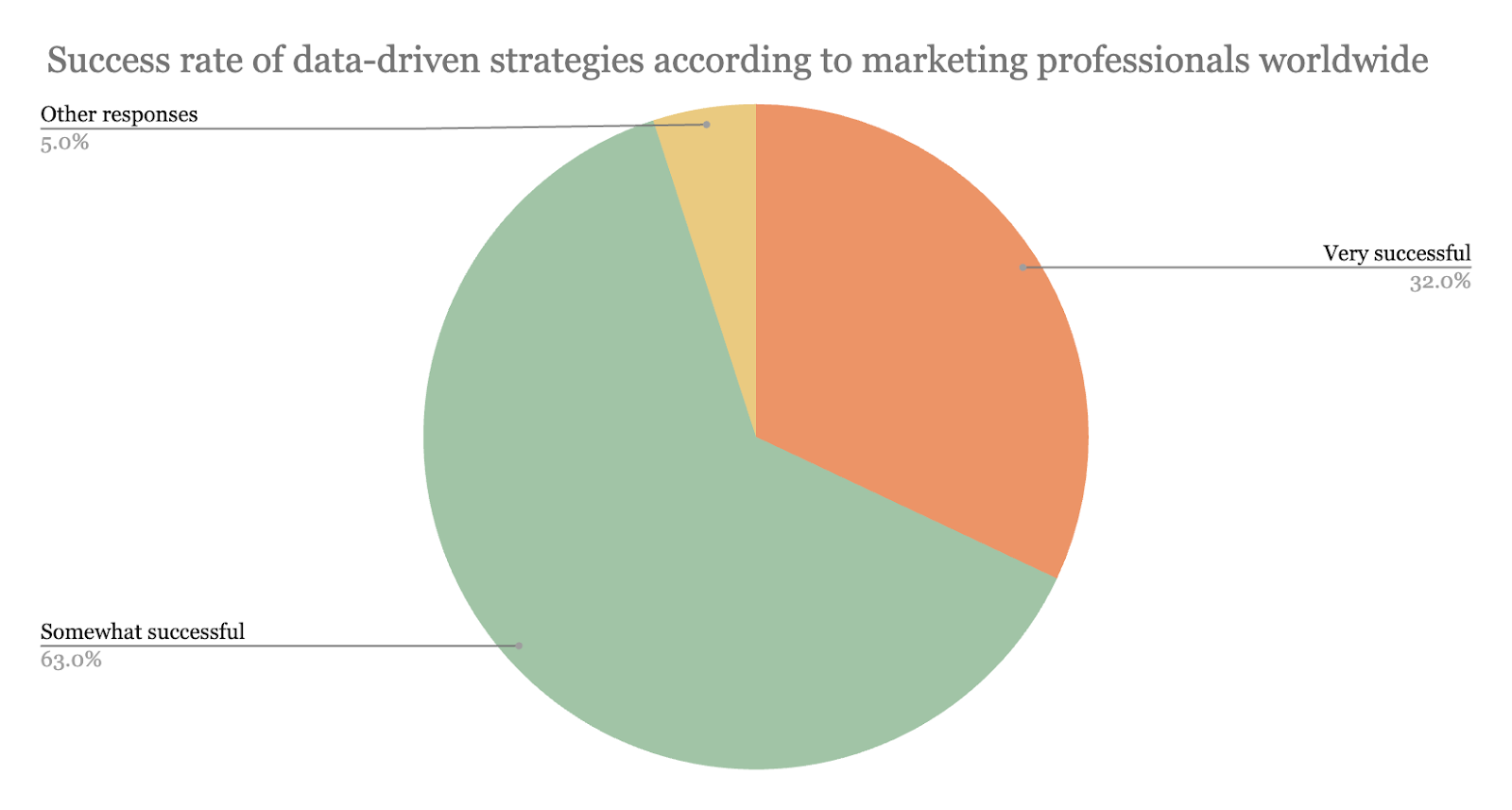
A Statista survey found that about 63 % of marketing professionals worldwide rate their data‑driven strategies as somewhat successful, and 32 % rate them as very successful. These numbers show us that a clear majority of marketers obtain measurable benefits from using data‑centric approaches.
Smarter product and service development
Business intelligence supports product teams by revealing unmet needs, usage patterns, and feedback from the market. These insights help businesses refine existing offerings, prioritize features, and develop products or services that match customer expectations.
Faster and more confident decision-making
Data-driven insights reduce uncertainty and allow marketing leaders to make decisions with greater confidence. Instead of relying on assumptions, organizations can respond quickly to market changes, adjust strategies, and allocate resources more effectively.
Greater transparency and accountability
Marketing intelligence makes marketing performance more transparent and measurable. By clearly linking activities to outcomes, brands can understand what drives results and where investments deliver value.
According to a McKinsey report, demonstrating ROI and connecting marketing spend to revenue outcomes is now a top priority for Chief Marketing Officers (CMOs). Marketing analytics enables team leaders to justify decisions, optimize budget allocation, and build trust with executive stakeholders.
Reduced business and market risks
When marketers continuously monitor competitors, customer behavior, and industry trends, they can identify potential risks early. This proactive approach, which can be enabled by marketing analytics, minimizes costly mistakes and allows businesses to take action before problems escalate.
Easier entry into new markets
Marketing intelligence helps brands evaluate demand, understand local competition, and assess customer expectations before expanding into new regions or segments. This reduces uncertainty, lowers risks, and increases the chances of successful market entry.
How can your brand harness the power of marketing intelligence?
To truly harness the power of marketing intelligence, insights must be applied strategically, securely, and consistently.
Integrate marketing intelligence into daily decisions
Data works best when it informs real actions. Make marketing analytics a part of everyday decisions, from campaign planning to product development. Encourage teams to reference insights when designing messaging, targeting audiences, or planning launches.
Using enterprise feedback management software, organizations can systematically collect feedback from employees and customers alike, ensuring that the insights teams rely on are complete, up-to-date, and actionable.
Avoid common pitfalls and use best practices for marketing analysis
Effective marketing analysis should be structured, objective, and action-oriented. Below are some common pitfalls to watch out for.
- Relying on incomplete data – Missing sources can lead to distorted conclusions. Use multiple channels (surveys, web analytics, social media, CRM).
- Focusing only on metrics, instead of insights – Numbers without interpretation do not guide decisions. Create dashboards that highlight actionable takeaways, not just raw stats.
- Neglecting action – Collecting data without using it strategically wastes resources. Assign owners to insights. Choose someone who should be accountable for turning data into decisions. Set measurable goals for each insight applied.
- Bias and assumptions – Encourage cross-team review of insights to avoid human or departmental biases when interpreting results.
Maintain strong security and compliance standards
It's essential to ensure secure and compliant use of marketing intelligence to protect sensitive customer and competitive data. Consider using secure platforms, including on-premises solutions like Checkbox. These platforms will allow you to store and process data internally while maintaining full control.
Strong security practices prevent breaches, ensure compliance with privacy laws (GDPR, CCPA), and maintain customer trust.
Final thoughts
Marketing intelligence is a structured process that transforms raw data into insights you can use to improve marketing performance, engage customers, reduce the risk of costly mistakes, and ensure your business stays ahead.
Market analysis only pays off when insights are shared and used across your teams, while sensitive data stays secure. With the right approach and the robust tools for conducting surveys and market research, competitive intelligence becomes a strategic asset rather than a reporting exercise.
Ready to turn insights into action? Start by building a structured and secure marketing intelligence process, using robust on-premises software.
Request a Checkbox demo to see how you can collect, manage, and safeguard your marketing insights with a secure solution that drives real business impact.
Marketing intelligence FAQs





Contact us
Fill out this form and our team will respond to connect.
If you are a current Checkbox customer in need of support, please email us at support@checkbox.com for assistance.
