
Customer feedback surveys: How to unlock business growth with actionable insights
Loyal customers are not a coincidence. Acquiring them is the start, the next steps are consistently delivering more than expected, resolving problems quickly, and providing real value constantly. To achieve this, companies need more than just guesswork – they require actionable insights and recommendations.
Customer feedback surveys provide you with direct access to the voice of the customer. These surveys reveal what's behind customer satisfaction. They show where there's frustration, and which aspects of your product and service to improve.
Analysts, market researchers, and marketers use these survey insights for decision-making, building stronger strategies, and enhancing business results.
This guide covers how to leverage customer feedback surveys to understand your users, boost customer satisfaction, enhance performance, and underpin long-term success. It covers survey types, vital metrics, question design, and the best tools for customer feedback surveys available on the market.
Good customer feedback creates great experiences. Great experiences create loyalty. Loyalty powers growth.
What are customer satisfaction surveys?
Businesses use customer satisfaction surveys to gather honest feedback from customers regarding what they liked and disliked about a product, service, or experience..
These surveys help you understand what your business is doing well and what it needs to improve. They give you real feedback directly from the customer, which is much more valuable than taking an educated guess or viewing only internal data.
Survey data empowers companies to make more informed decisions, solve problems faster, and create experiences that retain customers or bring them back again and again.
Why is customer satisfaction important?
Happy customers will buy more, remain loyal, and recommend your brand to friends, according to aggregated data on ResearchGate. In fact, customers who have had positive experiences with a company spend 140% more than those with negative experiences, according to analysis from Medallia.
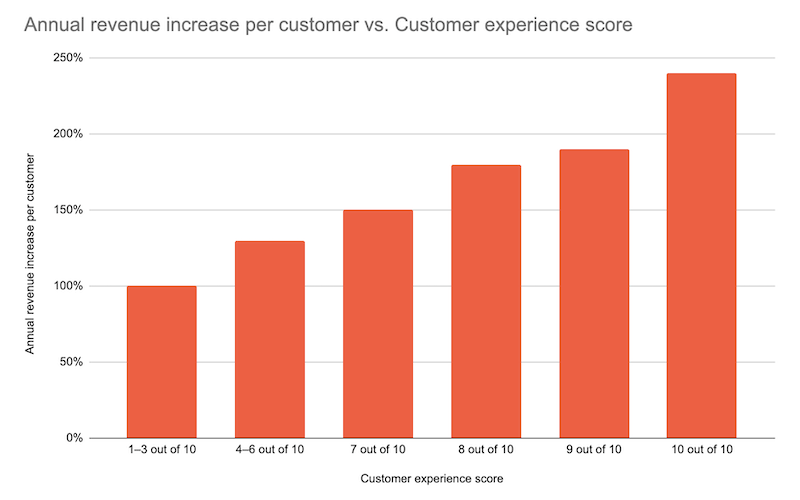
Providing good customer service is central to those positive experiences, as customers whose issues are resolved quickly are 2.4 times more likely to be loyal to a company.
Businesses with higher levels of customer satisfaction demonstrate more sustainable growth, winning new customers as well as retaining existing ones. PwC reports that, at 73%, experience was the third most important factor in customers' purchasing decisions, only behind price and product quality.
So, companies with high customer satisfaction win in sales, growth, customer retention, and market valuation.
"Firms that do better than their competition in terms of satisfying customers (as measured by ACSI) generate superior returns at lower systematic risk." – Claes Fornell, Sunil Mithas, Forrest V. Morgeson III, & M.S. Krishnan
So, what's the role of surveys in customer satisfaction? Surveys make it easy to quantify satisfaction and uncover what's driving it, or working against it.
To properly process and analyze customer feedback, companies use sophisticated survey tools and software, like Checkbox, SurveyMonkey, Qualtrics, and others. These customer feedback management survey tools help businesses convert raw feedback into strategies to improve the customer experience.
How customer satisfaction surveys help your business
Well-crafted surveys for customer feedback and satisfaction will help you enhance customer experience, boost loyalty, and increase revenue.
But how do satisfied customers drive business success?
They stick around
Many marketers underestimate the importance of customer loyalty, how quickly it is formed, and how quickly it is lost.
Did you know that every second customer can feel loyal after just one purchase? According to a study by Medallia and Ipsos, 52% of customers said they feel loyal to a brand after the first transaction if the experience was positive.
They bring others with them
A satisfied customer will tell friends about your brand or post a glowing review. Word-of-mouth marketing never really stops.
They are your greatest marketing advocates
Happy customers provide the best testimonials, case studies, and user-generated content (UGC). Their word is stronger than any advertisement you can pay for. People trust people, so their testimonials add authority to your message.
They cost less to retain
Holding on to a customer is usually less expensive than acquiring a new one. Сustomer feedback surveys allow you to catch potential churn risks early and respond before customers leave.
By aggregating satisfaction scores over time, you can even measure the impact of changes, campaigns, or your updates. Track metrics like customer satisfaction score (CSAT) to gain insight into what's working well, and where there's room to do better.
Checkbox helps you decode customer feedback. Request a demo today!
53 customer satisfaction survey questions
Want to get useful feedback? Ask the right questions. Here are over 50 carefully selected customer satisfaction survey questions. They address different elements of the customer experience.
Overall satisfaction
- How satisfied are you with your overall experience?
- How likely are you to continue using our product/service?
- Did we meet your expectations?
- Would you feel confident choosing us again in the future?
Customer support experience
- How satisfied were you with the support you received?
- Was your issue resolved quickly?
- Did our support team communicate clearly?
- How easy was it to get help when you needed it?
- Is there anything we could have done better?
Product or service quality
- How satisfied are you with the quality of our product/service?
- Does the product/service meet your needs?
- How would you rate the value for money?
- Are there any features you find unnecessary?
- Is our product/service reliable?
Ease of use
- How easy is it to use our product/service?
- Were you able to accomplish your goal today?
- Is the interface or design intuitive?
- Did you need help to get started?
- How could we improve usability?
Onboarding or first-time experience
- How easy was it to get started?
- Did you feel supported during setup?
- Was the onboarding process clear?
- Did you run into any issues during your first use?
- What could make the start easier for you?
Loyalty & recommendation (NPS-related)
- How likely are you to recommend us to a friend or colleague? (Net Promoter Score question)
- What's the main reason for your score?
- What would increase your likelihood of recommending us?
- How do we compare to similar companies?
Feature requests/improvements
- Is there a feature you wish we offered?
- What's one thing we could improve?
- Are there tools you wish were integrated with ours?
Customer relationship
- Do you feel valued as a customer?
- How responsive are we to your needs?
- Do you trust our company?
- Is it easy to get in touch with us?
Website or app experience
- How would you rate your experience on our website/app?
- Was it easy to find what you were looking for?
- Did you encounter any bugs or errors?
- How could we improve your online experience?
- Did our site/app load quickly?
Purchase or checkout process
- How smooth was the purchase/checkout process?
- Were the pricing and options clear?
- Did you face any issues while placing your order?
- Was the delivery time acceptable?
- Would you buy from us again?
Communication & transparency
- How well do we keep you informed about updates, changes, or new features?
Competitor comparison
- Have you used similar products or services before? How do we compare?
Future expectations
- What would you like us to focus on next?
Final open-ended questions
- Is there anything else you'd like to share about your experience?
- What was the most memorable part of your interaction with us?
- What nearly stopped you from using or buying from us?
- If you could change one thing about our product or service, what would it be?
- Do you have any suggestions to help us serve you better?
Customer satisfaction survey questions, such as CSAT, NPS, and customer effort score (CES), help you determine how satisfied and loyal your customers are. However, a full voice of the customer program goes even beyond these.
Employ standardized measures to augment your voice of the customer survey questions with other data sources, such as product data and support calls. This means that you capture open-ended opinions across multiple touchpoints.
To achieve this, explore new formats, such as video surveys, to dig deeper into emotions and context. Knowing how to get customer feedback with video surveys can reveal subtle cues, tone, and sentiment that written answers often miss. You'll understand not just what customers think, but why they feel that way.
What is your customer satisfaction score, and how to calculate it
CSAT metric will show the degree to which your customers are satisfied with a product, service, or experience. How to measure it? Ask customers to rate the level of their satisfaction on a scale. For example, you can offer a scale from 1 (very dissatisfied) to 5 (very satisfied).
Simple steps to calculate your CSAT:
- Ask customers a simple question like: "How satisfied are you with your experience?"
- Mark down their survey responses on a numerical scale (usually 1 to 5 or 1 to 10).
- Total the customers who gave a positive rating (normally 4 or 5 on a 5-point scale).
- Divide it by the number of responses.
- Multiply the result by 100 to give a percentage.
Example: 80 customers responded to your survey, and 60 of them gave 4 or 5.
Your CSAT score is: (60 ÷ 80) × 100 = 75%
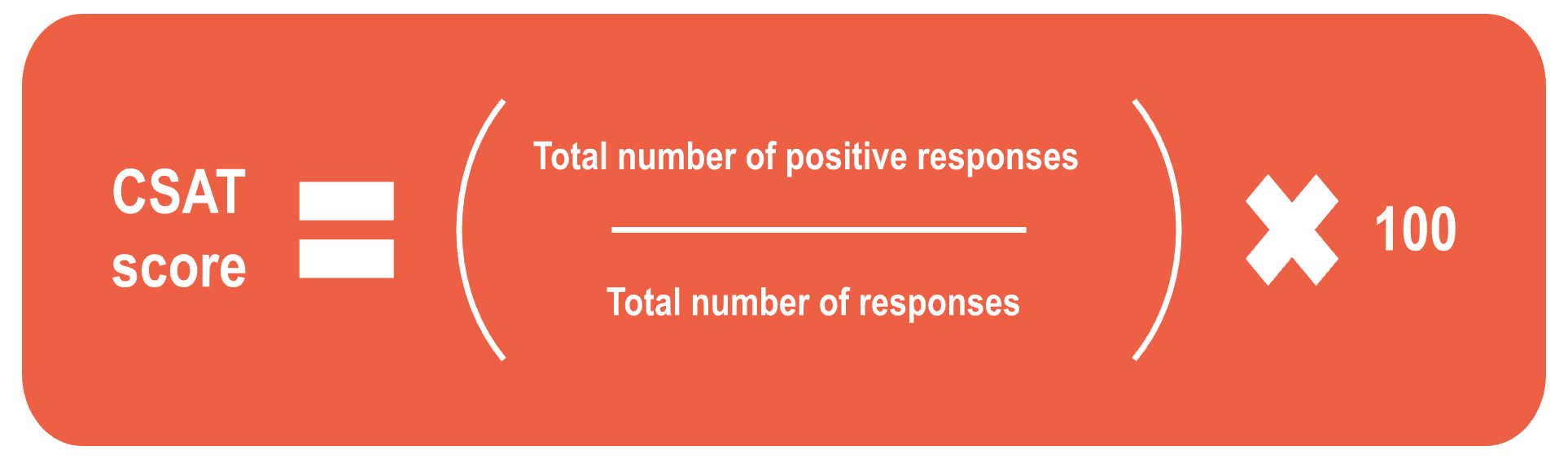
The higher the CSAT, the more customers are satisfied. The use of customer satisfaction survey questions and correct measurement of results will enable you to track the trend over time and, at the same time, know whether your customers' experience is improving or needs your attention.
How to create and send customer feedback surveys that work
Crafting well-working surveys requires more than asking questions. Having the right tools and methodology is essential for value-added feedback.
The main capabilities to look for in robust survey software:
- Multi-channel deployment: Send customer feedback surveys via email, SMS, websites, or apps to reach customers where they are.
- Personalized templates: Use simple-to-adjust questions and formatting to match your branding.
- Real-time analytics: With real-time customer feedback surveys and analytics, you'll get actual insights and reports to respond quickly.
- Integration capabilities: Integrate your survey software with your CRM, marketing platforms, and data platforms to automate feedback and enhance your marketing intelligence.
- AI-powered analysis: Use AI for understanding customer feedback in surveys, because artificial intelligence enables fast analysis of open-ended responses. This means you'll save time and better comprehend customer sentiment.
Surveys remain one of the most effective ways to collect quantitative insights at scale, and tools powered with all these features will help you succeed. Trying to decide which tool to go with?
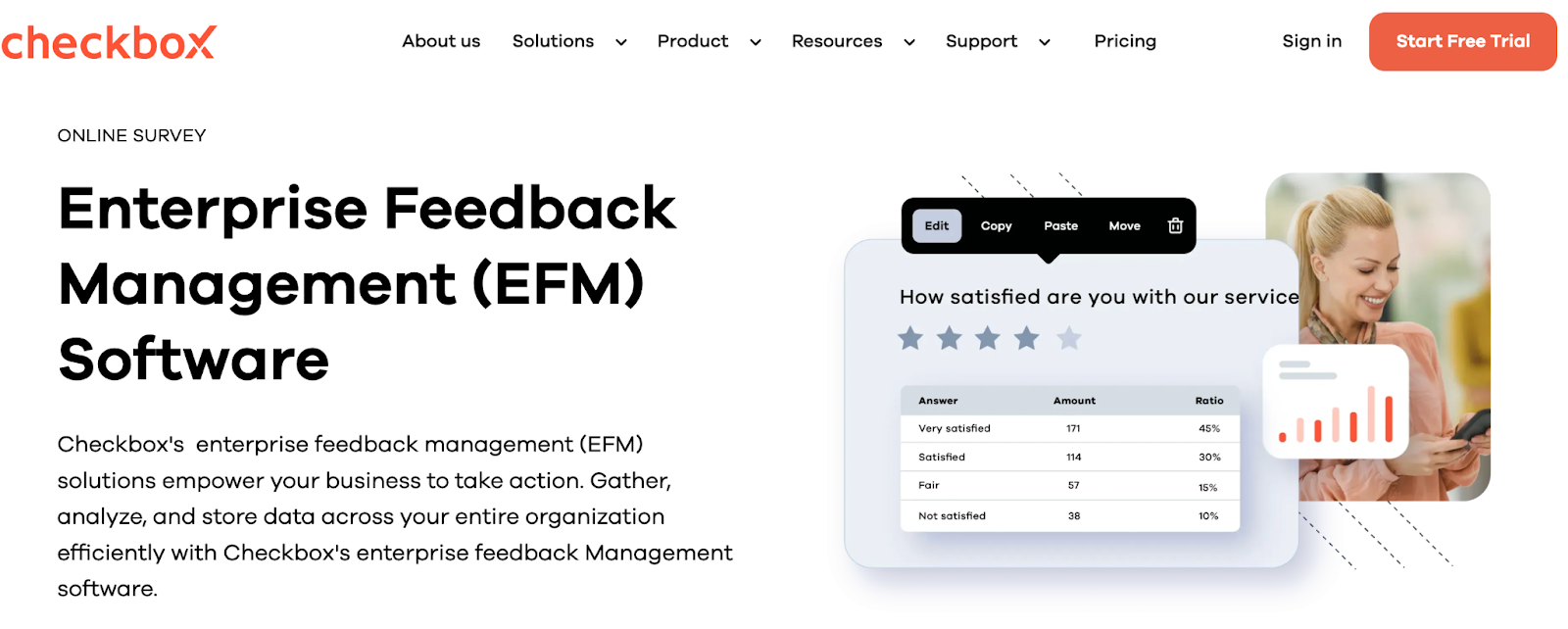
Checkbox is a robust enterprise feedback management platform for business needs. The software offers not just surveys but also advanced analytics, integrations through an API or webhooks, advanced customization and deployment options, and other tools that provide the full benefits of customer feedback surveys.
Checkbox includes personalized questionnaires, multi-channel support, and more sophisticated AI tools for organizing customer feedback surveys and sentiment analysis – these advanced AI capabilities allow you to measure customer emotions and trends in an instant.
Сustomer feedback surveys work well, but are not your sole option. Focus groups and interviews provide a deep qualitative understanding and can uncover nuance in survey findings. They are especially useful in testing new ideas or tricky questions.
And what's also important to add is that you don't have to overcome these challenges alone. There are experts ready to help you.
If internal management of feedback is an issue, then outsource to research agencies or customer insights consultants. Have them design surveys, collect information, and do the number-crunching so your team can focus on strategy and action.
Final thoughts
Customer satisfaction is your foundation for long-term success. Collecting and acting on customer surveys and feedback helps you understand your customers' requirements, improve your products and services, provide better product experiences, and build beneficial relationships.
For best results, create solid surveys with relevant customer satisfaction survey questions and leverage helpful feedback survey software tools. Combine surveys with interviews or focus groups for more in-depth information. Track your CSAT consistently and follow up on feedback promptly to show customers that you care.
Want to enhance your customer feedback process with one of the top platforms for customer feedback surveys?
Request a free demo of Checkbox so you can listen better, obtain helpful insights, and respond faster.
Customer feedback surveys FAQs




Contact us
Fill out this form and our team will respond to connect.
If you are a current Checkbox customer in need of support, please email us at support@checkbox.com for assistance.
